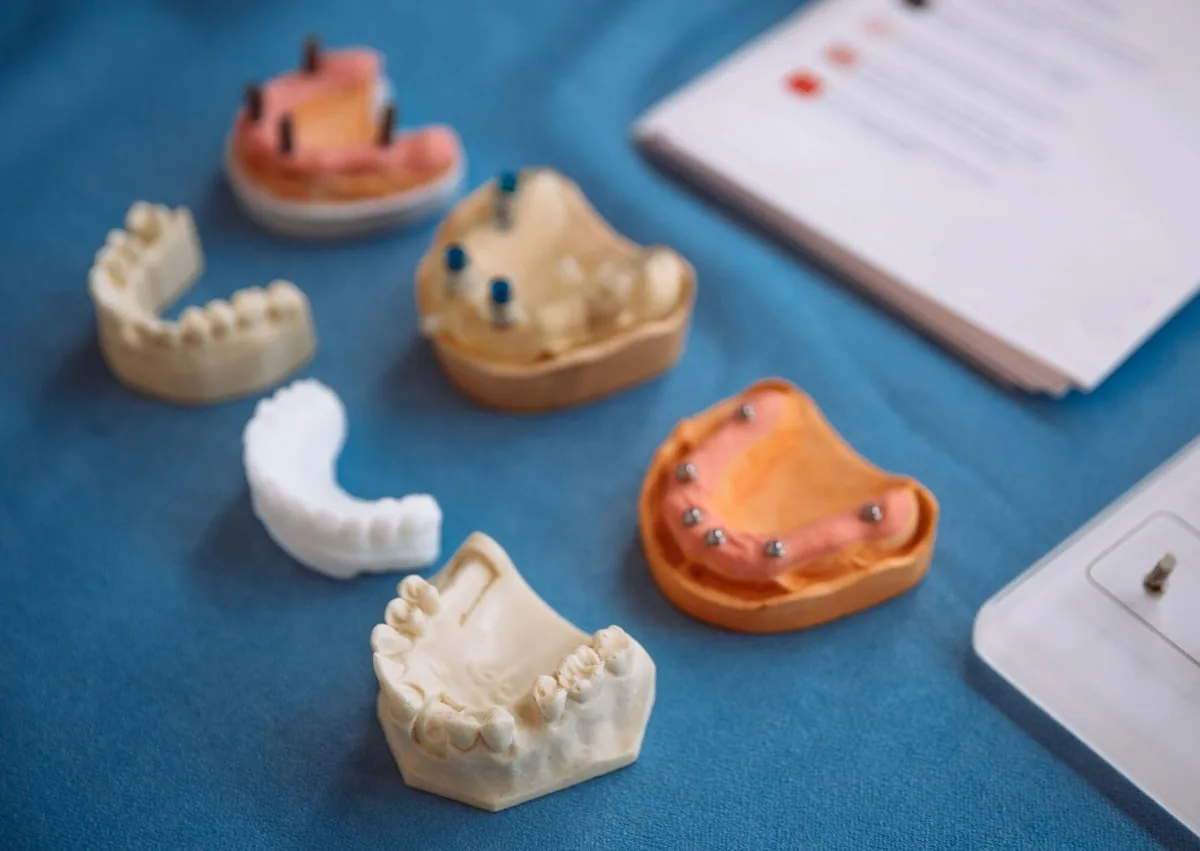
If you are trying to budget for full-arch tooth replacement, the short answer is that full mouth dental implants cost about $20,000 to $50,000 per arch in the United States. Replacing both upper and lower teeth often totals about $40,000 to $100,000 or more, depending on the treatment design, materials, and surgical needs.
That broad average cost is only a planning range. Your actual quote depends on how many implants are used, whether bone grafting or extractions are needed, what type of final teeth you choose, and whether the estimate includes temporary and final restorations. For a broader overview of implant pricing, see cost of dental implants.
Considering whether full-arch replacement is right for you, All-on-4 implants can simplify treatment by using fewer implants to support a stable bridge. Elmtree Family Dental in Columbia, SC helps patients understand candidacy and expected outcomes in clear, patient-centered consultations.
“Full mouth implants” usually does not mean one implant for every missing tooth. In many cases, four to eight implants support a fixed bridge for each arch, and options such as All-on-4 implants may reduce the number of implants needed.
A complete estimate may include the exam, 3D cone-beam CT imaging, implant surgery, abutments, temporary teeth, lab work, and the final bridge. It may also include extractions, sedation, and follow-up visits, but not every office bundles those services the same way.
Ask for a written treatment plan that clearly states whether the fee is for one arch or both arches. Also confirm whether temporary teeth and the final restoration are included.
The biggest reason prices vary is case complexity. Bone loss, active gum disease, difficult extractions, and the need for grafting or sinus augmentation can all increase the total cost.
The type of final teeth also matters. Acrylic or composite bridges often cost less upfront, while zirconia and other ceramic options usually cost more because of material and laboratory costs.
Location, provider experience, and lab fees also affect pricing. A lower quote is not always a better value if it excludes key services, uses different materials, or leaves out maintenance and repair expectations.
Not every full-arch solution has the same cost, feel, or maintenance needs. Comparing fixed and removable options can help you understand why estimates vary so widely.
|
Option |
How It Is Supported |
Typical Considerations |
|---|---|---|
|
Fixed full-arch bridge |
Usually four or more implants |
Stays in place; higher initial cost; requires careful cleaning underneath |
|
Implant overdenture |
Usually two to six implants |
Removable by the patient; often less expensive; attachments may need replacement |
|
Conventional denture |
Gum and underlying bone |
Lowest initial cost; no implant surgery; may move and does not prevent bone loss |
A fixed bridge may feel more secure than a removable denture, but it is not right for everyone. Bone volume, bite forces, oral hygiene, smoking or nicotine use, grinding, and medical history all affect the recommendation.
Some advertised prices apply only to ideal cases and may not include services many patients need. Common added costs include tooth extractions, bone grafting, infection treatment, anesthesia, a temporary prosthesis, or upgraded final materials.
Before you accept a quote, ask these questions:
Implants can last many years, but they are not maintenance-free. Even when implants remain healthy, the bridge, screws, attachments, or surface materials may eventually need repair or replacement.
Dental insurance may help with exams, extractions, dentures, or part of implant treatment, but many plans leave a large out-of-pocket balance. Annual maximums, waiting periods, and exclusions often limit how much is paid.
Medical insurance may help in limited situations involving trauma, tumors, or certain medical conditions. Routine replacement of missing teeth is usually handled under dental benefits instead.
Ask for a pre-treatment estimate from your insurer, but remember that it is not always a guarantee of payment. If financing is offered, compare the interest rate, fees, deferred-interest terms, and total repayment amount.
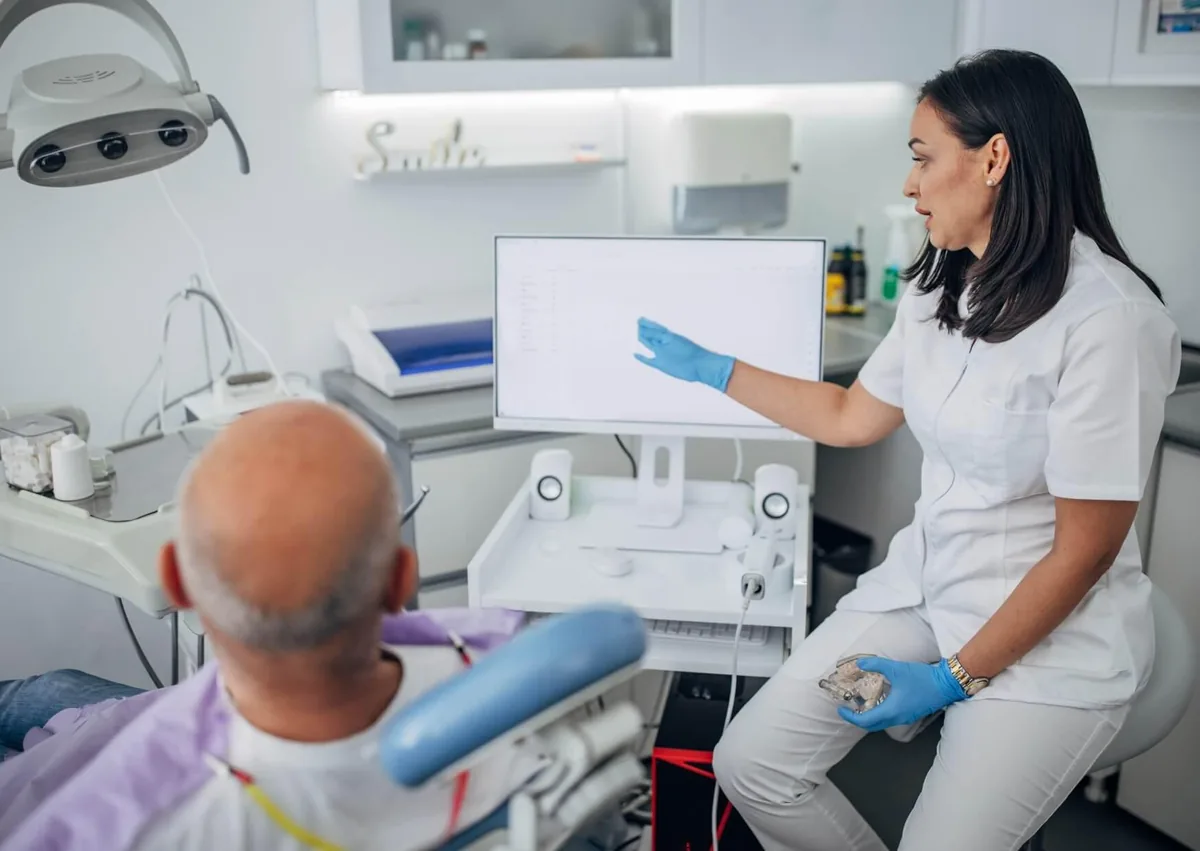
The evaluation usually includes a health review, exam, bite assessment, photos or scans, and 3D imaging. Your dental team will check for infection, gum disease, bone loss, and health factors that may affect healing, such as poorly controlled diabetes or nicotine use.
Some patients receive temporary teeth on the same day as implant placement. Others need a removable temporary during healing.
Same-day teeth do not mean same-day completion. Final teeth are usually made after the implants heal and integrate with the jawbone, which often takes several months.
Treatment may move faster in straightforward cases and slower when grafting or staged surgery is needed. Following food, cleaning, and follow-up instructions is important because too much force or poor plaque control can interfere with healing.
Implants do not get cavities, but the surrounding gums and bone can still become inflamed or infected. Daily cleaning, professional maintenance visits, and a night guard when prescribed all help protect the investment.
Avoiding tobacco and nicotine can improve healing and reduce complications. Ongoing bleeding, swelling, bad taste, increasing pain, bridge movement, or trouble cleaning around the restoration should be checked promptly.
Seek urgent dental care for rapidly increasing facial swelling, uncontrolled bleeding, severe worsening pain, or a restoration that suddenly becomes loose. Trouble breathing or swallowing, swelling near the eye or neck, or signs of a serious allergic reaction require emergency medical care.
A consultation with an implant-trained dentist, oral surgeon, periodontist, or prosthodontist can clarify whether fixed implants, an overdenture, or another option best fits your anatomy, health, goals, and budget. Bring your medical history, medications, insurance details, and any prior estimates so the treatment plan can be reviewed clearly.
If you're ready to explore whether All-on-4 implants can restore function and simplify full-arch care, arrange a personalized consultation to review costs, treatment sequence, and timing. Call Elmtree Family Dental about All-on-4 implants in Columbia and Forest Acres, SC at (803) 783-9900 to schedule your visit.
A broad U.S. planning range is about $40,000 to $100,000 or more for upper and lower fixed full-arch treatment. The total may be lower for removable implant overdentures and higher when extensive grafting, complex surgery, or premium restorative materials are needed.
Lower advertised prices may apply to one arch only, a removable restoration, temporary teeth, or implant placement without the final teeth. Ask for an itemized estimate that shows surgery, components, lab work, final restorations, follow-up care, and likely added procedures.
Coverage varies widely. Many dental plans pay only a limited portion and still apply deductibles, annual maximums, waiting periods, and exclusions.
A pre-treatment estimate can help you understand expected benefits, but it does not guarantee payment.
Implants and temporary teeth can sometimes be placed on the same day. Final teeth are usually delivered after healing and implant integration, and immediate loading is not appropriate when bone stability or health factors make it unsafe.
They may offer strong stability, chewing function, and confidence for the right patient, but they also involve surgery, daily cleaning, maintenance, and possible future repairs. Comparing fixed and removable options with a qualified clinician can help you decide whether the benefits justify the cost in your situation. See dental implants pros and cons.
| Monday | 8:00 AM – 5:00 PM |
| Tuesday | 8:00 AM – 5:00 PM |
| Wednesday | 8:00 AM – 5:00 PM |
| Thursday | 8:00 AM – 5:00 PM |
| Friday | Closed |
| Saturday | Closed |
| Sunday | Closed |